Narcissist or Difficult Person? How to Tell the Difference (And Why it Matters)
By Christine Louis de Canonville
“Is my partner just difficult and selfish, or could they actually be a narcissist?”
As a retired psychotherapist who has specialised in narcissistic abuse for over three decades, I can tell you this isn’t a question to take lightly. The distinction between living with a challenging person and being in a relationship with someone who has narcissistic personality disorder is, quite literally, as stark as “night and day.”
Understanding this difference could be the most important insight you gain for your wellbeing and your future.
Why This Distinction Is Critical for Your Mental Health
Here’s what most people don’t realise: We’re all narcissistic to some degree. We need healthy narcissism to function and maintain self-esteem. But there’s a profound difference between:
- Someone going through a difficult period in their life.
- Someone with challenging but ultimately workable personality traits.
- Someone with pathological narcissistic personality disorder.
Getting this distinction wrong has serious consequences:
- You might stay in a harmful situation, believing it’s just “normal relationship challenges”.
- You could waste years trying to fix something that fundamentally cannot be fixed.
- You may miss crucial early warning signs that could prevent deeper psychological trauma.
- You might leave a difficult but salvageable relationship believing your partner is beyond help.
I’ve identified five crucial distinctions that can help you understand what you’re truly dealing with.
The 5 Critical Differences Between Narcissists and Difficult People
1. How They Handle Being Wrong
This is perhaps the most revealing difference, and one that many people overlook in the early stages of a relationship.
A Difficult Person:
- Gets defensive initially but can eventually acknowledge mistakes.
- May sulk, argue, or resist feedback, but doesn’t rewrite history.
- Can offer genuine apologies once they’ve had time to process.
- Shows gradual improvement and learning from past errors.
- Views being wrong as uncomfortable but not catastrophic.
A Narcissist:
- Never truly admits being wrong about anything significant.
- Consistently rewrites history to position themselves as the victim.
- Offers non-apologies like “I’m sorry you feel that way” or “I’m sorry you misunderstood”.
- Becomes enraged when presented with clear evidence of their mistakes.
- Views being wrong as a fundamental threat to their entire identity.
- Uses DARVO tactics (Deny, Attack, Reverse Victim and Offender).
🚩 Red Flag to Watch For: If your partner has never, not once, offered a heart-felt apology without excuses, conditions, or turning the situation back onto you, this is a significant warning sign that goes beyond normal defensiveness.
2. Empathy and Emotional Responsiveness
Understanding how someone responds to your emotional needs reveals everything about their capacity for real connection.
A Difficult Person:
- Can be self-centred but shows authentic concern when you’re genuinely distressed.
- May miss emotional cues initially but responds when you clearly communicate your needs.
- Has moments of honest emotional intimacy and vulnerability.
- Shows real remorse when they realise they’ve caused you pain.
- Can put your needs first during emergencies or crises.
A Narcissist:
- Views your emotions as inconvenient interruptions to their agenda.
- Shows “empathy” only when it serves their purposes or public image.
- Cannot tolerate your emotional needs taking precedence over theirs.
- Uses your vulnerabilities and private confessions as weapons during future arguments.
- Interprets your emotional pain as evidence of their power and control.
- Becomes irritated or hostile when you’re upset, rather than concerned.
🚩 Red Flag to Watch For: If your partner consistently dismisses your emotional needs, uses your vulnerabilities against you, or seems energised rather than concerned when you’re in distress, you’re likely dealing with pathological narcissism.
3. Treatment of Others (The True Character Test)
How someone treats people who cannot benefit them reveals their authentic character—not the persona they present to you during the idealisation phase.
A Difficult Person:
- May be challenging with you but maintains basic respect for others.
- Has some true, long-term friendships (even if relationships are sometimes complicated).
- Shows courtesy to service staff, delivery drivers, shop assistants.
- Can maintain professional relationships and workplace respect.
- Treats children and elderly people with appropriate care.
A Narcissist:
- Shows obvious contempt for anyone they perceive as “beneath” their status.
- Burns through friendships regularly, always blaming the other person.
- Treats service workers, waiters, and staff with visible disdain or dismissiveness.
- Has a consistent pattern of workplace conflicts where colleagues are always “the problem”.
- Believes rules, queues, and social norms apply to others but not to them.
- May be charming to those who can benefit them whilst cruel to those who cannot.
🚩 Red Flag to Watch For: Pay careful attention to how they treat waitstaff, customer service representatives, or anyone in a service position. This behaviour, more than almost anything else, reveals their true character.
4. Response to Your Success and Personal Growth
This area often reveals narcissistic tendencies that weren’t apparent during the early “love-bombing” phase of the relationship.
A Difficult Person:
- May initially feel threatened by your successes but ultimately wants you to thrive.
- Can feel competitive but doesn’t actively undermine your achievements.
- Supports your personal growth even when it makes them feel insecure.
- May need reassurance but doesn’t sabotage your opportunities.
- Celebrates your wins, even if they sometimes need encouragement to do so.
A Narcissist:
- Cannot tolerate you outshining them in any area of life.
- Actively works to undermine your confidence and achievements.
- Minimises your successes with phrases like “Anyone could have done that” or “You just got lucky”.
- Becomes noticeably hostile when you receive attention, praise, or recognition.
- Deliberately sabotages important opportunities, events, or celebrations.
- Must be the centre of attention at your achievements or special occasions.
- Views your success as a direct threat to their superiority.
🚩 Red Flag to Watch For: If your partner consistently finds ways to diminish your achievements, steal focus from your important moments, or becomes hostile when you succeed, this extends far beyond normal jealousy or insecurity.
5. Capacity for Genuine Change and Growth
Perhaps the most heartbreaking difference, this distinction determines whether your relationship investment has any hope of paying dividends.
A Difficult Person:
- Shows gradual, measurable improvement when given clear boundaries and consequences.
- May resist change initially but can recognise problematic patterns over time
- Responds meaningfully to communication about relationship issues.
- Can engage productively in couples therapy and implement suggested changes.
- Demonstrates some self-awareness, even if it’s limited or develops slowly.
- Takes responsibility for their role in relationship problems.
A Narcissist:
- Views any suggestion for change as a personal attack on their character.
- Makes promises to change solely to avoid immediate consequences, then reverts instantly.
- Uses therapy sessions to manipulate the therapist into taking their side against you.
- Becomes more skilled at hiding problematic behaviour rather than actually changing it.
- Fundamentally lacks self-awareness—consistently sees themselves as the victim in every scenario.
- Blames everyone else for relationship problems while taking no responsibility.
🚩 Red Flag to Watch For: If years of clear communication, firm boundaries, professional therapy, and even significant consequences have produced no lasting positive change in their behaviour, you’re likely dealing with a personality disorder rather than simply difficult traits.
Understanding the Narcissism Spectrum: Where Does Your Partner Fall?
It’s crucial to understand: Narcissism exists on a continuum. Someone can display narcissistic traits without having full Narcissistic Personality Disorder (NPD). However, if your partner consistently demonstrates:
- Five or more of these problematic patterns.
- Across different areas of their life (not just in your relationship).
- Over an extended period (not just during times of stress).
- Without genuine improvement despite clear consequences and professional help.
…then you’re very likely dealing with pathological narcissism rather than temporary difficult behaviour.
Quick Self-Assessment: Difficult Person or Narcissist?
Instructions: Rate each statement based on your partner’s typical behaviour over the past year. Use this scale: Never (0 points), Rarely (1 point), Sometimes (2 points), Often (3 points), Always (4 points).
Tip: Keep score on paper or mentally as you read through
- My partner genuinely admits when they’re wrong and apologises without conditions or excuses.
- My partner shows authentic concern for my feelings when I’m visibly upset or distressed.
- My partner treats service staff, delivery drivers, and others with basic human respect.
- My partner celebrates my achievements and successes without making the moment about them.
- My partner has made lasting positive changes when I’ve clearly expressed concerns.
- My partner takes responsibility for their actions without immediately blaming external factors.
- My partner can handle constructive criticism without becoming defensive or hostile.
- My partner shows real remorse and changed behaviour when they’ve hurt me.
Your Total Score: ___/32
What Your Score Suggests:
- 24-32 points: You’re likely dealing with someone who has difficult traits but is psychologically healthy and capable of growth.
- 16-23 points: Some concerning patterns that warrant serious attention and possibly professional guidance.
- 8-15 points: Significant red flags suggesting deeper psychological issues that may require specialised intervention.
- 0-7 points: Strong indicators of pathological narcissistic behaviour requiring immediate attention to your safety and wellbeing.
The Clinical Perspective: Understanding Healthy vs. Pathological Narcissism
In my clinical practice, I often reference the work of researchers who’ve identified that healthy narcissism includes appropriate self-love, realistic self-assessment, and the ability to maintain genuine empathy for others.
Healthy narcissism allows people to:
- Maintain appropriate boundaries whilst showing sensitivity to others.
- Experience realistic self-regard without needing to diminish others.
- Stay present in relationships rather than constantly seeking external validation.
- Engage in reciprocal relationships with equal give-and-take.
Pathological narcissism, however, involves:
- A compensatory false self that lacks structural authenticity.
- Inability to distinguish their identity from others.
- Addiction to narcissistic supply (constant external validation).
- Fundamental incapacity for genuine empathy or reciprocal relationships.
This distinction—rooted in decades of psychological research—explains why traditional relationship advice often fails with narcissistic individuals. You cannot use healthy relationship strategies with someone who lacks the psychological infrastructure for reciprocal connection.
What This Means for Your Relationship Strategy
Understanding whether you’re dealing with difficult traits or pathological narcissism should radically change your approach:
If You’re Dealing with a Difficult Person:
- There’s legitimate hope for improvement with patience, clear boundaries, and possibly professional support.
- Traditional relationship advice and communication strategies can work
- Couples therapy can be beneficial and productive.
- Your emotional investment has a reasonable chance of yielding positive returns.
If You’re Dealing with a Narcissist:
- The patterns are deeply ingrained and highly unlikely to change significantly.
- Your focus needs to shift from changing them to protecting yourself.
- Traditional relationship strategies may actually make the situation worse.
- Professional guidance becomes essential for your safety and wellbeing.
The most challenging aspect: Narcissists are often exceptionally charming to outsiders, which can make you question your own perceptions and experiences. This is why trusting your lived reality over their public persona becomes crucial.
Your Next Steps: Moving from Confusion to Clarity
If this assessment has revealed concerning patterns, please know that recognising these red flags is the first step toward reclaiming your wellbeing. You’re not imagining things, you’re not overreacting, and you’re certainly not crazy.
Immediate steps to consider:
- Document patterns rather than isolated incidents.
- Strengthen your support network with people who witness your reality.
- Consult with professionals who understand narcissistic abuse dynamics.
- Prioritise your physical and emotional safety above all other considerations.
Remember: You deserve to be in a relationship where your feelings matter, your growth is celebrated, and your wellbeing is consistently prioritised. If you’re constantly questioning your sanity or walking on eggshells, that’s not normal relationship difficulty, that’s a sign something is badly wrong.
Go Deeper: Understanding the Complete Psychology
This article provides the framework to distinguish between challenging personality traits and pathological narcissistic behaviour. However, understanding the complete psychological mechanisms behind these patterns, and learning comprehensive protection strategies requires deeper exploration.
For a deeper understanding of narcissistic psychology and advanced protection strategies, you may be interested in reading my book “The Ghost in the Machine: Unmasking the Hidden Psychology of Narcissistic Abuse.”
In the book, you’ll discover:
- The complete psychological framework behind narcissistic manipulation.
- The three distinct cycles of narcissistic abuse and how to recognise each phase.
- Advanced strategies for protecting your mental health while navigating these relationships.
- The comprehensive methodology for making empowered decisions about your future.
- Real case studies and practical applications of these concepts.
This article helps you identify what you’re dealing with. The book shows you exactly how to protect yourself and what to do next.
About the Author
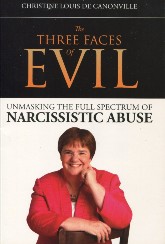
Christine Louis de Canonville is a retired psychotherapist with over 30 years of clinical experience specialising in narcissistic abuse and trauma recovery. She is the author of four books on narcissistic behaviour, “The Ghost in the Machine,” “The Gaslighting Syndrome,” “Shame Begets Shame” and “The 3 Faces of Evil.” Her work has helped thousands of people worldwide recognise, understand, and recover from narcissistic abuse.
Important Safety Note: If you’re experiencing any form of abuse, emotional, physical, financial, or otherwise, please reach out for professional support. You don’t have to navigate this situation alone.
Share this resource: Help others who might be struggling with these same questions.



0 Comments